

Gildas
Patron of the Righteous Rebuke

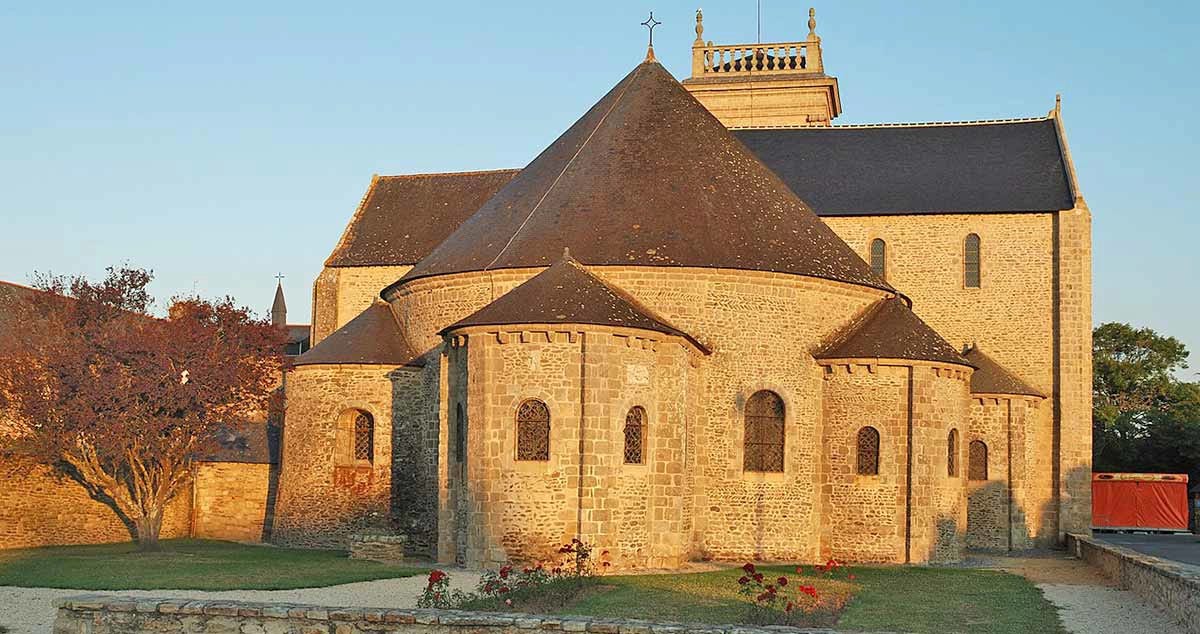
Gildas (c.494-?570/581) was a monk and vigorous missionary. whose family were of the Royal line of Strathclyde -still a British-speaking kingdom at that time, part of the Old North or Hen Ogledd. Trained by St Illtud at Cor Tewdus (The College of Theoderic), Gildas went on to Ireland where he completed his education and was ordained. According to an early 9th century life by an anonymous Breton monk,he is said to have made a bell for St Brighid of Kildare, and to have helped King Ainmire of Ireland reestablish the order of Christian worship. He visited Rome and Ravenna, and after a mission in the North of Britain, he came to Brittany where he established a hermitage and a church in Morbihan.
St Gildas’ feast day is 29th January - a date as flinty and uncompromising as the saint himself. He was the writer of De excidio et conquestu Britanniae (On the Overthrow and Conquest of Britain) which is often referred to as The Ruin of Britain. This moralistic, smarting book tells of the worsening period that befell Britain after the Romans withdrew their administration from these shores: in it, we hear the back story of that time, the incursion of the Saxons, Angles and Jutes from North-West Europe, and the declining state of the island. The memory of this awful time reverberated in the memory of all Britons, until the time when the Battle of Badon subdued the incursions for a few years, as Gildas tells us:
‘The year of the siege of Bath-hill (Badon), when took place also the last almost, though not the least slaughter of our cruel foes, which was (as I am sure) forty-four years and one month after the landing of the Saxons, and also the time of my own nativity. And yet neither to this day are the cities of our country inhabited as before, but being forsaken and overthrown, still lie desolate; our foreign wars having ceased, but our civil troubles still remaining. For as well the remembrance of such a terrible desolation of the island, as also of the unexpected recovery of the same, remained in the minds of those who were eyewitnesses.’ (De Exicidio)
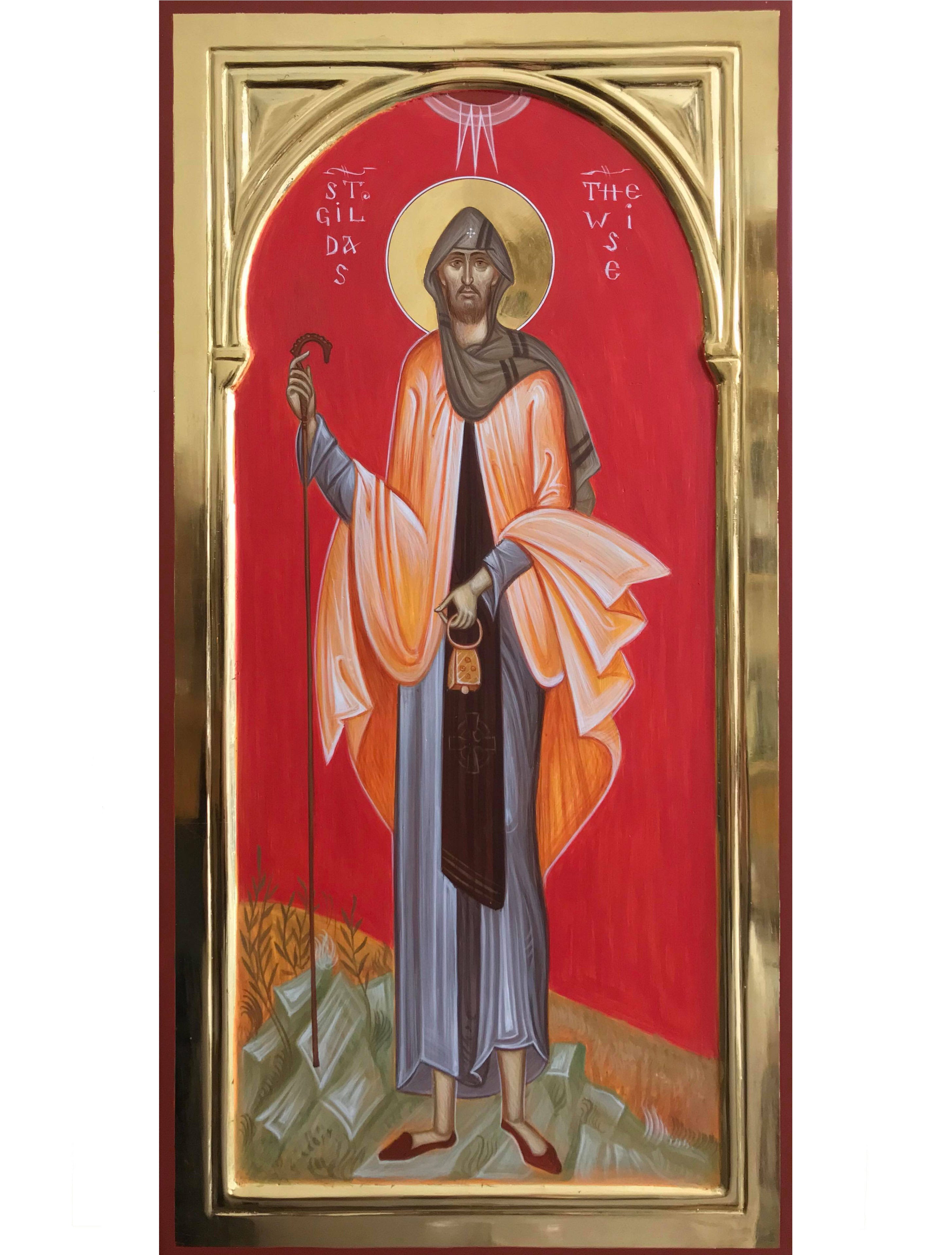
Gildas is the Patron of Vannes in Brittany, but he might also be known as the patron of all forensic journalists and fearless commentators who give an opinion on the terrible state of a country, where it is sliding rapidly into something even worse. Gildas’ book was, among other things, a right old telling-off, with gloves off, of the British rulers who were left behind to administer things. They had reverted to selfish and tyrannical ways, pleasing themselves at the cost of the country, and failing to maintain standards. Their chief fault, in his book, was their inability to combine to save Britain from the invading Saxons and their neighbours. Gildas is certainly the patron of the righteous and fearless rebuke.
Gildas is best known among Arthurian circles as the person who, irritatingly, did not write about Arthur. The Life of Gildas by Caradoc of Llancarfan (composed in 12th century) gives us a possible reason for this. Gildas, he tells us, was one of the 24 sons of Caw, a Caledonian lord. One of his brothers, Hueil, raided over the border so often that he was eventually killed by Arthur. Prior to that time, we are told, ‘Gildas loved Arthur exceedingly.’ But despite the Caradoc’s insistence that they were reconciled after this execution, Arthur is not mentioned by name in De Excidio at all .The only person who comes off well from his wholesale slating of British kinglets was Ambrosius, Arthur’s predecessor in defending the island. An earlier hagiography of Gildas from the 9th century tells is a different story, sticking to a Christian C.V. of unimpeachable virtue: while Caradoc’s life clearly draws upon the Arthurian account of the British cleric, Geoffrey of Monmouth’s Historia Regnum Britanniae (History of the Kings of the Britain) which was responsible for introducing the Arthurian mythos to the Norman world. The two lives are not strictly coordinated.
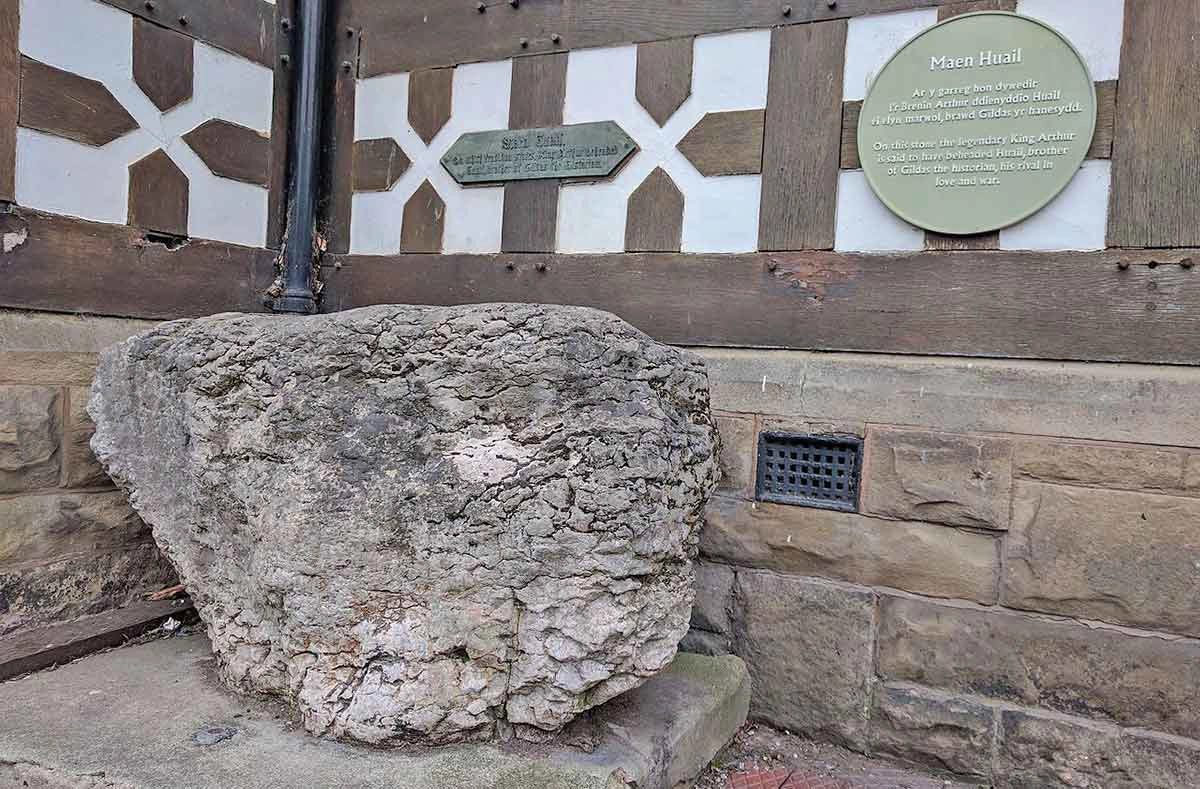
Caradoc says that De Exicidio was written after Gildas escaped from the capture by Orcadian pirates, when he was staying at Glastonbury Abbey; this happened at the time that Melwas had captured Arthur’s queen, and Arthur brought a siege against the whole town. Gildas was. apparently able to persuade Melwas to give her up and to prevent ‘the tyrant Arthur’ from sacking the town.
Having delivered this tirade against weak British rulers, Gildas himself departed the shores of Britain, retreating to Brittany, with many of his countrymen and women, who chose to put the sea between themselves and the ignominy of slavery under the invaders.
ABELARD LAUDS GILDAS
Following the research that I’ve been doing on Abelard, the great 12th century philosopher and poet, over the last months. I have been translating some of the liturgical texts that he wrote for his beloved Heloise, after they had both entered the monastic life. This would have been sung on 29th January by the nuns of the Paraclete, the monastery dedicated to the Holy Spirit by Abelard. (Just as Caradoc says Gildas established a hermitage church dedicated to the Trinity near Glastonbury!) While he was made abbot of Gildas’ own monastery at Rhuys in Brittany, Abelard was living hundreds of miles away from his wife, who had entered a monastery after he had been castrated by agents of her uncle. (See my post of 3rd October 2025.)
It is likely that he consoled himself by creating words and music to the liturgy for Heloise, since he was very unhappily in charge of a turbulent monastery whose monks were more interested in hunting and cohabiting with their wives and children (yes, really!) than attending to monastic discipline. Perhaps a tinge of Gildas’ own acerbic tongue was employed upon these. wayward monks to try and bring them into line?
Abelard has picked up here on the core of Gildas’ presence and how he was remembered among his native Bretons. Here, Gildas is the lamp shedding light upon embattled Britain, and upon all those who fight against inimical and god-less forces. Whatever people are fighting against, Gildas is invoked to support them.

Hymn to Gildas by Peter Abelard.
Trans. Caitlín Matthews
A lamp is placed upon the lampstand
Gildas is a mirror of prudence and life.
His words instruct us, his example challenges us,
Correcting the errant, arousing the sluggish.

This lamp confers truth’s light
Which he did not hide under a bushel.
This star was set to guide the shipwrecked by the True Sun,
Through whom he provided leadership to the homeland.

Here, unfailing as the evening star
Shining over the very edge of the world,
Where Britain is girdled by the ocean:
Pounded is the dry land by the flooding wave.

Inhabiting these realms are a vigorous folk in arms,
Since danger of war is imminent;
At the first sign of battle, Gildas is invoked,
Safely through swords the battle lines advance.

To whom belongs the right of assent,
Undaunted faith stands firm even in battle.
Glory be upon these and other warriors!
May Divine grace attend our endeavours!

Copyright Caitlín Matthews 2026.
Brilliant article, I love reading about the Saints and the early monastic traditions especially of the 5th-6th centuries, it seems a need when the outer world is in turmoil or changing dramatically to have access to a deep spirituality that shelters us, thank you for helping to provide that.