

GOLDEN VERSES: STEP 34
IMMORTAL ARRIVAL

In this, the last step of the Golden Verses, we arrive at what looks like an apotheosis. This step radically brings us to a yet closer alignment with the divine nature of the universe which, for many, may not be actually manifest at present, but which remains a ever-present possibility, depending on our practice.
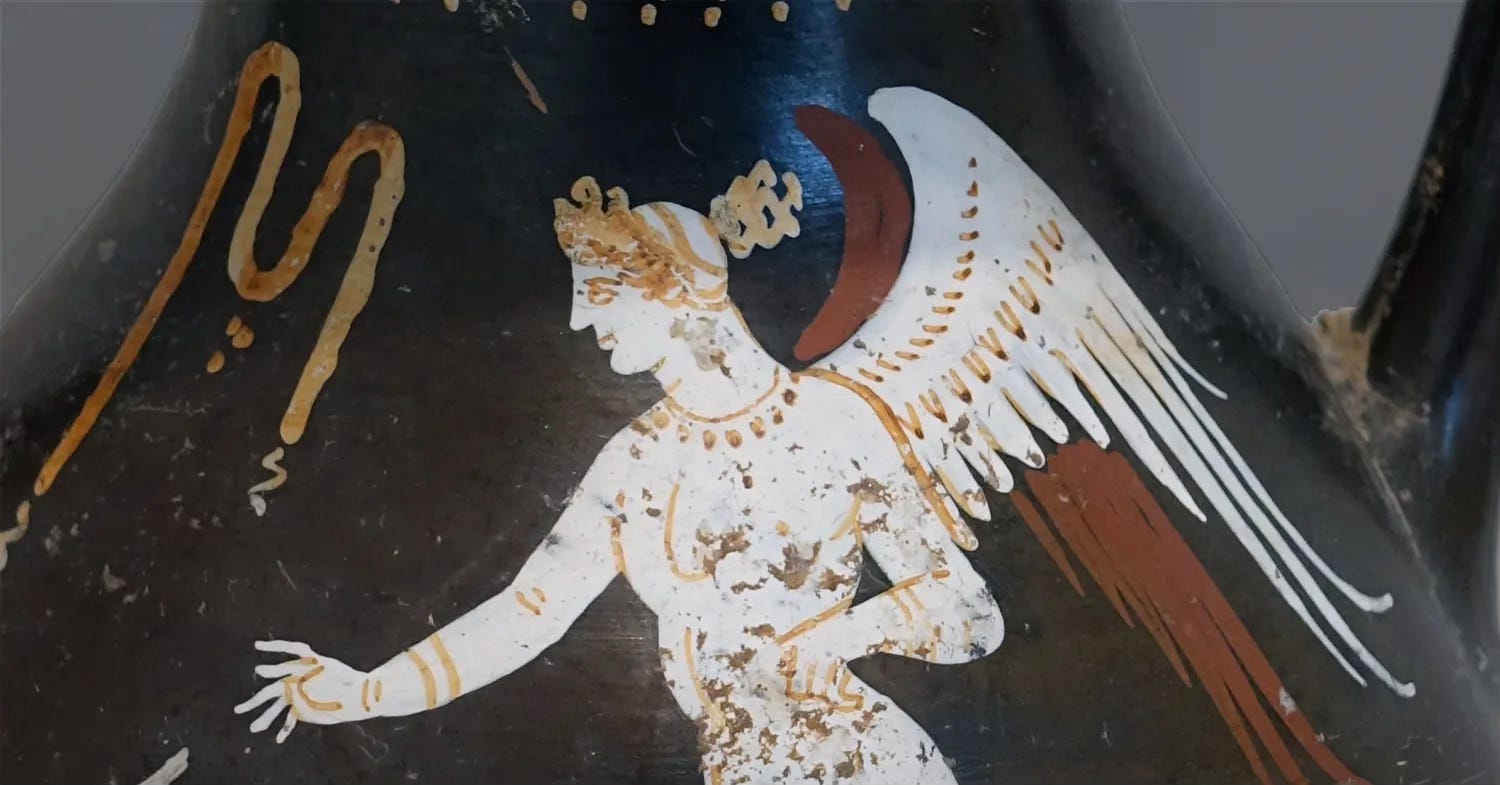
And when you have left off your mortal body
To arrive at the most pure aether,
You will be a god, deathless and immortal,
And death will have no power over you.
-Verse 71
BEING FAITHFUL TO LOVE
How can we become gods? Just how is that possible? Throughout the path of the Golden Verses, we have been led, step by step, to this last verse whose promise breaks the bounds of our understanding. It is offering us nothing less than theosis – or ‘becoming a god.’ It sounds outrageous to our ears, but this path is nothing less than the practice of imitating the patterns that the Immortal Gods have woven for our Cosmos and embodying them.
We are not the only ones to even consider this prospect. As I wrote earlier in this part, Orthodox Christians still maintain this Neo-Platonic understanding in the doctrine of theosis or ‘god-becoming.’ By never forgetting our own essence, by becoming nearer to the divine by our soul’s best remembrance, by the reformulation of our behaviour, by attention to the guidance of our daimon and of Nous which acts as our hegemonikon, we eventually become dyed in the essence that created the gods themselves.
We started our study with the Immortal Gods in the first step of this path of Golden Verses, and now we end by joining them in one accord. As Hierocles’ commentary tells us, ‘The souls of humans may justly be called ‘mortal gods’ since they sometimes ‘die’ to the divine life by going astray from the One, while sometimes they recover the divine life again by returning to the One.’ (GV, p.20 Dacier/Rowe)
Proclus, too, in his Elements of Theology, speaks of the nature of souls like this: ‘every soul is divine (such as in the soul of the stars) or else subject to oscillation between thought and unconsciousness, (as it is with the soul of humans) or else in an intermediate condition; that is, always thinking, but inferior to the divine souls (as in daemonic souls).’
We continued our study of the Golden Verses with a breakdown of Gods, Daimons, Angels, Heroes, earth-Dwelling Daimons or ancestral wise humans who act as mentors, then the race of humans. We saw how the Oath, the changeless guard, that demands that we recognize the essential likeness and agreement between all beings – whether they are living in our physical world, or part of the greater universe. As Plato tells us,
‘in this universe, the wisdom that created the world distinguished, in conformity with their nature, beings which occupy the top, the bottom and the centre the first of these rational beings are called celestial and gods; those rational beings that have been allotted to the space following this group, he calls ethereal and good daimons: they have become the interpreters, messengers, and angels of the things that is useful for humans to know. The tribe of humans occupies the last rank with they are quite terrestrial beings, human souls and as Plato would say “immortal humans.” These three kinds of beinga are attached to one another as if in a single living being, or in a chorus and harmony, but the distinction in an accordance with the nature that is preserved and mixed with regard to their unity and their mutual connection. And those that are placed in the superior rank command the lower ones, but the God who is their originator and reigns as over them all.’ (Hierocles, On Providence, as given via Photius, Codex 251)
Here Hierocles follows a standard Neo-Platonic view of the human being has having three parts to it: a physically material body with an irrational soul, which was put into the shell-like physical body, like an oyster in a shell; and a rational soul which was created by the demiurge, and which has a vehicle (or immaterial body) which is luminous in nature. (see, Hadot, I, Studies of the Neo-Platonic Hierocles) pp36ff
While we may readily understand the theory of all this, the how may escape our wondering minds. How are we do proceed?
A strong clue is given us by Iamblichus, the 3rd century philosopher and writer of De Mysteriis, or On the Mysteries, who writes that is not from our desires and wishes that our calling upon the gods is effective, nor can it be brought about by any coercion on our part but: ‘it is by virtue of the divine love which holds together all things, that (practitioners) provide a union of insoluble involvement – not by inclining the minds of the gods to humans, but rather… disposing the human mind to participation in the gods, leading the soul up to the gods and bringing it into an accord with them through harmonious persuasion. It is for this reason indeed that the sacred names of the gods and other types of divine symbol, that have the capacity of raising us up to the gods are enabled to link us to them.’ (DM, 12, 42)
It is by our love of the divine that we are always led: every person has their own longings, yearnings, dreams and visions that show some part of this bigger vision – and it is by that means that we must proceed.
THE RISE AND PROMISE OF THEURGY
The Golden Verses was purposely composed in a simple and approachable way for any person to follow. Its sheer simplicity was essential so that it could be remembered and recited as a basic guide to a good life. From its Pythagorean beginnings right up until the ten centuries afterwards when Hierocles codified it and wrote his commentary which has guided us thus far, philosophy underwent many evolutions and developments. The most critical of these changes happened in Hierocles’ own lifetime: it could not have been foreseen by Pythagoras’ followers, perhaps, although I suspect Pythagoras himself saw how the tyranny that persecuted his own way of life might play out in future times. We imagine that it would have been unthinkable in Plato’s time, and yet, we have the evidence of Socrates’ own arrest and trial on trumped-up charges, which resulted in his death. The seeds of destruction lie ready to be germinated at any time.
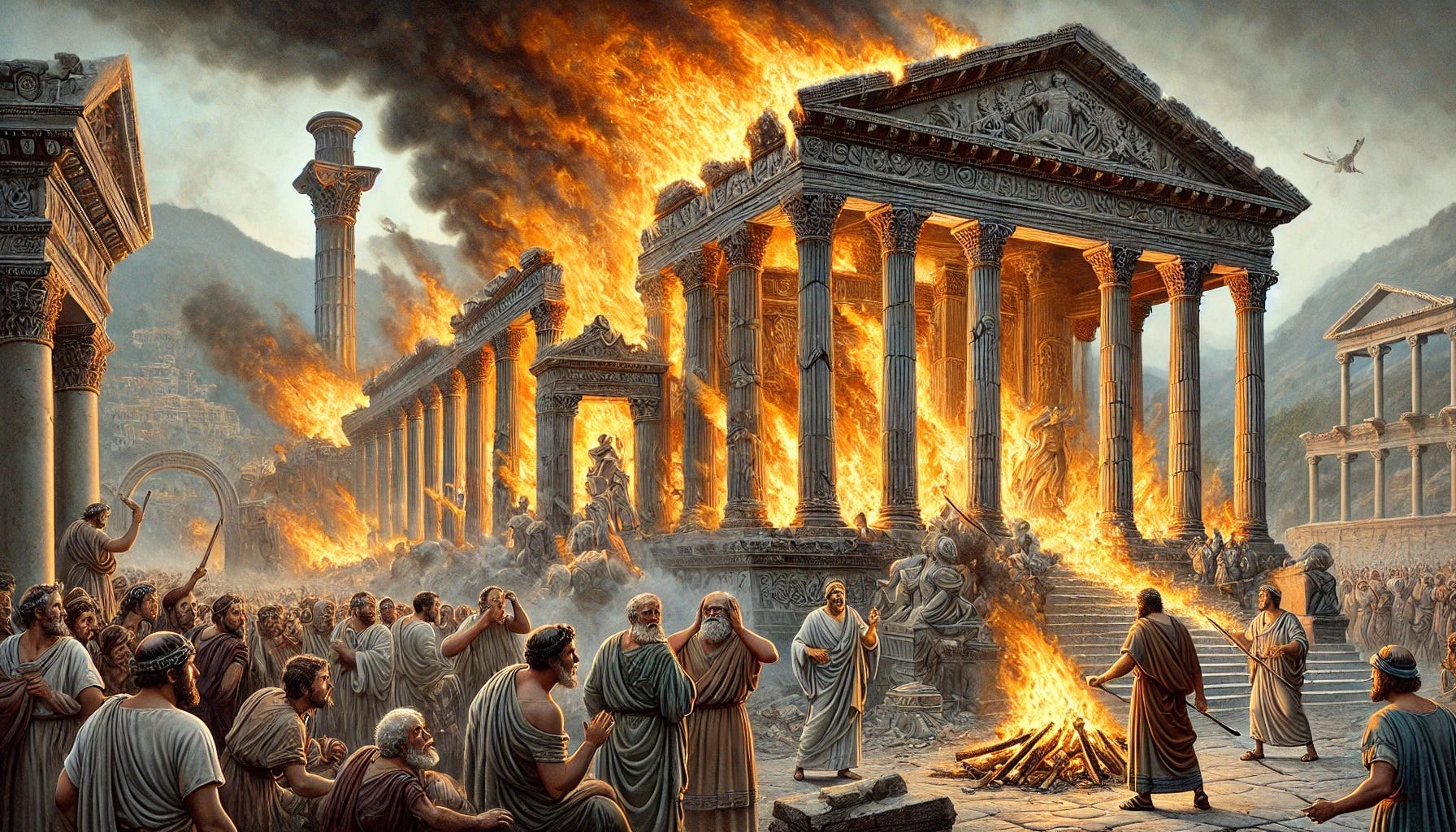
Whoever could have predicted the entire dismantling of the state practices and the destruction of the temples that hit the ancient world in the late 5th century? Who could have conceived that all the sacred practices of antiquity would come under proscription? Within the period of 391-480, most of the temples were destroyed or repurposed, and sacred practices that had been ancestrally inherited from ancient times were forbidden. Everyone had to be Christian and that was that by imperial decree. To put this sudden change into context, we have to remind ourselves that no pre-Christian religious body had ever blocked or prevented any other worship of any other nation or people in this exclusive way. People worshipped and believed at different levels of understanding and were all free to change or express their devotion in ways suitable for them.
To put this context, let us say first, that it was very rare for sacred places ever to be attacked or destroyed: while accidents and incidental damage during wars might happen, everyone understood temples to be the dwelling places of the gods within our world, and treated them with respect. One name alone stands forth from the Classical era - an arsonist called Herostratus who, on the very day of Alexander the Great’s birth in 365 BCE set fire to the wooden roof of the great Temple of Artemis, goddess of childbirth and the hunt. When questioned why he had done this heinous deed, it became clear that it was solely for the notoriety that would attached to his name. The officials of Ephesus immediately passed a law of damnatio memoriae, forbidding the mention of his name: nevertheless, his doubtful fame is remembered. The whole of Ephesus was as shocked and bewildered as people have always been when similarly unmotivated and unjustified acts of violent destruction have taken place since.
With the public worship of the gods, any celebrations of the mysteries or philosophical practices forbidden all around the Mediterranean, private practice had to adapt in order to survive. What had once been universal and open had to become private and internalised to a great degree: it is from this point onwards that we see the downgrading of ordinary worship as ‘illegal,’ the celebration of the mysteries as ‘unholy,’ and most private devotion as ‘duplicitous and heretical.’ From here onwards, anything pertaining to these forbidden practices became divided from the mainstream as hermetic, magical and occult. This is how a sacred tradition that included every aspect of devotion, personal and public, had to become suddenly private and hidden. This is why there is today such a great division between religion and magical practice: our very understanding has been divided in such a way that anyone practicing them today is still seen as subversive and illicit. My whole life has been a process of reassessing and reassimilating these back into ordinary daily life and devotion.
In Damascius’ Philosophical History, which details the life of Isidore of Gaza (450-520) a philosopher who had studied under Proclus, we hear how the ongoing persecution of non-Christians and philosophers finally worsened: among practitioners, this frightening state of affairs was known as ‘the present situation’, an expression which was ‘code’ for state-sponsored and radical persecutory aggression towards non-Christians. Isidore is shown having to find his own way gingerly through the many pitfalls and betrayals of this period, as Damascius tells us:
‘it was clear that Isidore disliked “the present situation”, nor did he wish to worship the statues of the gods, but he was fast moving towards the gods themselves, who are hidden within - not in sanctuary - but in the very mystery – whatever this may be – of the completely unknowable, and how did he move towards them, when they are of such a nature? By the power of an extraordinary love, itself no less mysterious. What is love if not unknowable? Those who have experienced it know what I am saying, for it is impossible to describe it, nor is it any easier to comprehend it with the mind.’ (Damascius, The Philosophical History, p36)
In the face of this opposition, Damascius exclaims: ‘Truth itself is in danger of being extinguished; people will experience it since they are unable to endure its sacred dawn.’ (ibid.) The light that once shone upon everyone, without fear or favour, was becoming reserved for just one religion – a nonsense that could not be endured.
In the wake of destroyed temples, the philosophical schools had to become private enclaves where students and teachers had to quickly learn who they could trust: the frequency of infiltration made everyone very careful, since betrayal could lead to punishments of imprisonment, flogging, and other sorts of terrorism that followed students and teachers alike. In some cases, persecution led to summary death by corporal punishment, execution or cruel and purposeful starvation. It is extraordinary that even in this fearsome atmosphere, people were still able to study or find a teacher. Many, like Isidore, went on a wandering pilgrimage around parts of the Middle East to reconnect with fellow students and practitioners, but most, including Damascius himself, who was the very last head of the Platonic Academy, ended up fleeing into Syria: he, like many others, finally ended up in Harran, in what is now modern Turkey. It was from here that many of the Neo-Platonic traditions entered the Islamic world, influencing Islamic thinkers and theologians, and especially the mystical Sufi tradition.
What was once a common experience of worship in a temple could not be immediately replicated by ordinary means, and so practitioners were encouraged to take aspects of the sacred practice into personal practice – as many spiritual traditions have had to do who have had to learn survival through long diasporas, like Judaism and Buddhism, when their temples and holy places were destroyed or became unreachable. In order to survive, philosophers were bidden to move beyond the foundational methods of philosophy and incorporate into their practice theurgy or ‘telestics’ – the art of working directly with the gods.
Damascius speaks of it like this: ‘Theurgy and philosophy do not stem from the same principles. Philosophy descends from the one cause of all things to the lowest level of existence… As for theurgy, which is the worship of the gods, it ties the ropes of heaven bound salvation (to) the immortality of the soul…. The Egyptians were the first to philosophise on these things, indeed it is from them that Pythagoreans introduced all these matters to the Greeks.’ He writes of how philosophy with theurgy bring about, ‘the fusion with the divine, or rather the perfect union, the return of our souls to God,’ (Ibid. 4A and C)
If the philosophic writings from the early 6th century onwards are not greatly explicit about the actual practice of theurgy, then we can certainly understand why they read like encoded writings that would have been meaningless to one not instructed in philosophic approaches, or initiated in the mysteries! Every practitioner had to find their own personal divine resonances and pursue them – as you and I have to do still today. What does Hierocles himself tell us?
‘This is why philosophy is united with the art of sacred things (ieron techne,) since it is concerned with the purification of the luminous vehicle (of the soul), and if you separate the philosophical intellect from this art, you will find that no longer has the same power. Indeed, of the factors that work together to complete our perfection, some were first discovered by the philosophical intellect, and others were introduced by telestic activity, following the philosophical intellect. I called “telestic activity” the power that purifies the luminous vehicle, so that, of the whole of philosophy, the theoretical part may come first as intellect, and the practical part may follow, as a power.
Yet let us postulate two species of practice: one is civic morality, and the other telestics (of theurgy). One purifies us from irrationality through the virtues, and the other by excising material imaginations through the sacred methods. A not inconsiderable manifestation of political philosophy are the laws that regulate a collective, and of telestic philosophy, the sacred rites practised in the cities. (i.e. the Mysteries and state rites.) But the summit of all philosophy is the theoretical intellect; in the middle is the political intellect, and third is the telestic intellect… that is why we must join together into one single totality the science that finds the truth, the powers that project spirital virtues and that which produces purity, so that political activity may be accomplished in conformity with the dominant intellect, and that the sacred act may be shown to be in accord with both. ‘(GV XXVI, 24-28.)
Let’s just remember here that ‘political activity’ just means the civic philosophy of being considerate to your family, neighbour and country, and not the process of ‘politics.’ Golden Verses 1-22 cover our reformation in civic philosophy, Verses 23-28 are those that cover the art of Contemplative philosophy; while the whole of part of this course, Verses 29-34 is leading us to the telestic or theurgic practices that purify the soul, making it ready to be one with the divine.
In the Golden Verses, Hierocles has given us a simplified method of attaining the different levels of philosophical approaches outlined in it, as a foundation on which to base our approach to the divine. He asserts here that philosophy alone is not sufficient: we must also be exposed to the mystical awakening or ‘telestics’ of sacred rites, but within our personal spiritual practices, as well as joining in with the sacred rites that were celebrated in the city states. By purifiying our bodies and the rational soul, we come to a deliverance of our vision of sacred beings. By purifying our luminous soul vehicle by the telestic or mystic arts, and by joining in the celebrations of the temples and cities, we reach a hieratic elevation that makes us fit to enter into a divine communion.
Hierocles does not specify how these telestic methods should be performed nor what they precisely might entail, because the Golden Verses is a beginner’s method that would have been backed up by in-person supervision and mentorship, but he does say, ‘this entire practice, if it is done in a way fitting to the gods, and not performed in the manner of a charlatan, is in conformity with the canons of the truth and of virtue.’ (GV XXVI,8-9)
During his own life, Hierocles may have hoped for and envisioned the return of the temples of his youth and the state rites to which everyone was welcome; maybe, he hoped for the overthrow of the religion that demanded wholesale submission to its tenets, perhaps seeing this as but a temporary state of affairs that would not catch on; but, however he saw the future, he still had to write carefully during this era. While some of his evasive descriptions above may have stemmed from the fear of persecution, some of his caution certainly would have been to do with the fact that the greater mysteries of philosophy were those that simply couldn’t be put into print, but had to arrive from personal instruction and deeper inculcation from a living practitioner.
TAKING WING WITH LIVING THEURGY
So how can we proceed? We might draw upon the books that are listed here: they each present theurgy from within the Hellenic context and experience. Whether you read one or more of these, if will give you the sense in which things might go into your practice.
A Theurgist’s Reading List:
Living Theurgy by Jeffrey S. Kupperman.
A Theurgist’s Book of Hours by Jeffrey S. Kupperman
Theurgy: Theory and Practice: The Mysteries of the Ascent to the Divine by P.D.Newman.
Hellenic Tantra: The Theurgic Platonism of Iamblichus by Gregory Shaw
Theurgy and the Soul: The Neoplatonism of Iamblichus – by Gregory Shaw
Philosophy and Theurgy in Late Antiquity by Algis Uzdavinys
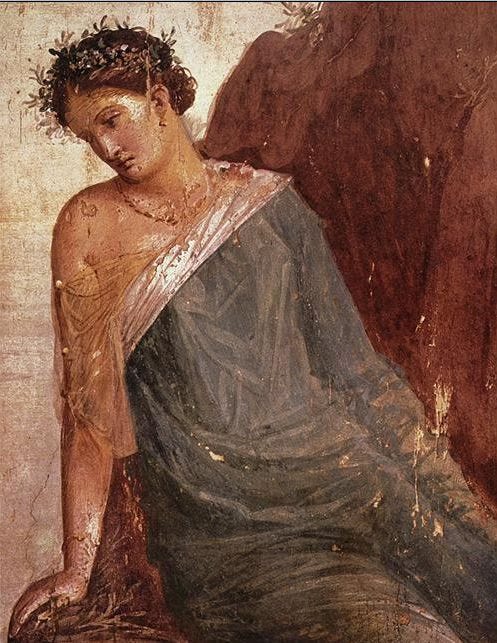
However, I am aware that there is another method of approach which may suit the individual better. This will require a longer, personal exploration but it will the gods themselves that open the doors to realization and connection. The following questions are given here as a means of exploring further through the lens of your own disposition. While none of us can have a clear and personal sense of the One – the creative intelligence and origin of the universe – we may each perceive and draw closer to those divinities or to one specific god or being that speaks most closely to your soul’s reception. It will require you to ‘act as if’ this divinity were a present power: you will have to resist seeing this being as ‘merely an archetype or psychological construct,’ but rather as a real being with agency.
Recognition:
1.Which divinity/ies speaks closest to your soul?
2.How do you perceive them, what do you know about them?
3. By what signs, images, tokens, gifts, skills, powers or appearances do you recognize them?
4. In what way in your soul’s viewpoint resonant with this divinity? How do you actually experience them?
5. If you were to speak to someone from the Late Classical period about this divinity, how might you introduce the god to this person? E.g. what is the nearest correlative divinity or being to that person’s world, by way of comparison?
6. How is this divinity still active in our world?
7. Close your eyes and envision them before you. What do you experience?
How do you feel towards them?
Drawing Closer:
1.Ask your divinity to show you a sacred glyph, sign, or symbol by which you can connect with them: draw or make the outline or shape of this glyph, sign or symbol as well as you can – on paper as a two-dimensional image, or in three-dimensions in clay.
2. Clear a place for a shrine dedicated to this divinity. It need not be elaborate or showy, especially if you share your room with others. Place at least a candle and the representation of the divinity’s symbol in a place where you can meditate or commune, asking the daimons and messengers (remember that the Greek for ‘messenger’ is angelos!) of the divinity to support your devotion.
3. Light your shrine daily at fixed times that suit your lifestyle and work. Come into the presence of the divinity and be at peace. Listen. Draw close.
4. When you ask the three questions before bed about your day, do so in the presence of the divinity.
5. When beginning a new activity, and on awakening, on setting out to work, on resting at midday, on coming home, on going to bed, return to attention to the divinity – maybe by swiftly making their sign upon yourself. Also, when things become muddled, annoying, exasperating, when losing your temper or arguing, receiving bad news or suffering unjust words or actions or condemnatory opinions, ask your daimon to remind you that the divinity is present even here.
6. Discover what pleases the divinity – what offerings you bring to your shrine, which is the divinity’s temple? (e.g. Flowers, a song, a poem etc.) Keep their shrine clean and tidy.
7. Keep a record of what you understand and what the divinity or their daimons and messengers are showing you.
What is outlined above will play out over time and develop in your soul. It is not a quick or instant way forward. The daily making of space, the quiet contemplation, the daily remaking and mending of your own behaviour and outlook, the way it is shaped and lifted by this communion of soul with the divinity is the beginning of a much deeper path which leads to all that is promised in the Golden Verses. Soon enough, the questions you ask will change and deepen; later still, even your questions will fall away and you will rest in the divinity or it within you.
Hierocles concludes that our task is as follows: ‘You see the end of the Pythagorean philosophy is that we may grow wings all over with which to soar aloft to the divine good so that at the ordained hour of death, leaving upon earth this mortal body, and its earthly nature, we may be ready for the celestial voyage, like champions in the sacred combats of philosophy. For then we shall return to our ancient country and be defined as far as it is possible for humans to become gods.’ (GV XXVI,28)
For most of us, our arrival at the last step of the Golden Verses is a destination that is slowly arrived at, a goal that may be greatly desired, to be glimpsed fitfully between the intervening terrain through which we travel. It is only by means of the supporting platform of the complete Golden Verses that we are being slowly conformed into the recognition of what our soul is capable of being, whose beauty and response to beauty come to remembrance in our true alignment with All That Is.
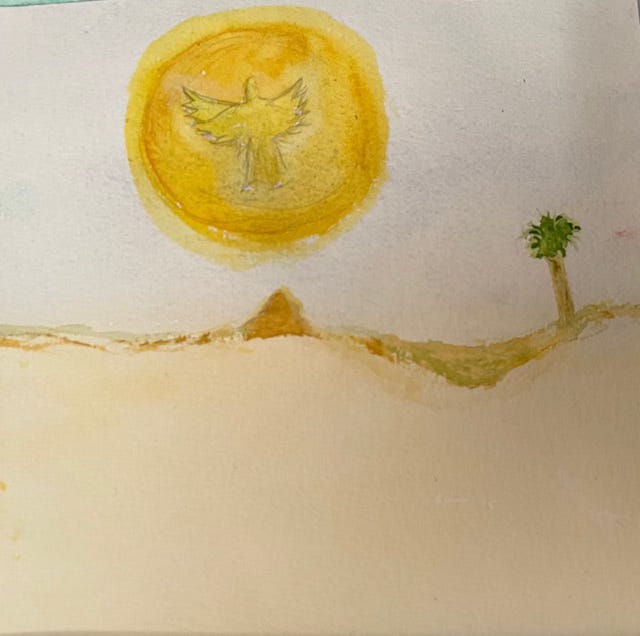
THE SOUL THAT MOVES INSIDE YOU by Caitlín Matthews
The soul that moves inside you runs the show,
An older god flown here, to live and die.
Bringing its wisdom on us to bestow.
First in forgetfulness, avoiding woe,
Folding away its wings without a sigh,
The soul that moves inside you fails to know.
And yet, like yeast that activates the dough,
Seeking the former knowing from on high,
Prays now for wisdom on us to bestow.
Awakening memory, as the visions grow –
As dawning clarifies a rainy sky –
The soul that moves inside you starts to show.
Sharpen your arrows, now pick up your bow,
Co-ordinate your wings, so you can fly.
The soul that moves inside you runs the show,
Bringing its wisdom back to surely flow.
MEDITATION
In these two passages, we return to consider the complete spectrum that Pythagoras first understood from his initiatory experiences.
‘By using some ineffable and unknown divine power, Pythagoras extended his hearing and fixed his intellect in the heavenly sounds of the cosmos. He alone could hear and understand the universal harmony and concord of the spheres, and of the stars that moved through them, which sound a music much fuller and more intense than any mortal tune…. Because he was so fortunately fashioned by the divine daimon which begot him, he believed that it would be enough for other humans to look to him, since they not able to apprehend the true primal and pristine archetypes for themselves, and to bestow, through images and signs, the benefits of his understanding. Just as we cannot look directly upon the sun because of its intense, shining rays, and so have to view eclipses in a deep pool of water…(the receipt of his direct experience) comes to our inadequate perception through such a compensatory reflection.
Iamblichus: The Pythagorean Life 15, 65-7.
In this second passage, Plotinus calmly looks at the experience of the last verse, through the eyes of initiation, whereby we put aside all that is not beauty, love and truth, so that we may be invested wholly with it as our only covering:
‘Let us, then, reascend to the Good itself, which every soul desires; and in which it can alone find perfect repose. For, if any one shall become acquainted with this source of beauty, he will then know what I say, and after what manner he is beautiful. Indeed, whatever is desirable is a kind of god, since to this desire tends. But they alone peruse true good who attend to intelligible beauty; and so far only tend to good itself, as far as they lay aside the deformed vestments of matter, with which they became connected in their descent. Just as those who penetrate into the holy retreats of sacred mysteries are first purified, and then divest themselves of their garments, until someone, by such a process, having dismissed everything foreign from the god, by the god alone, beholds the solitary principle of the universe, sincere, simple, and pure, from which all things depend, and to whose transcendent perfections the eyes of all intelligent natures are directed, as the proper cause of being, lie and intelligence.’ (Plotinus Ennead 1, 6 7-9)
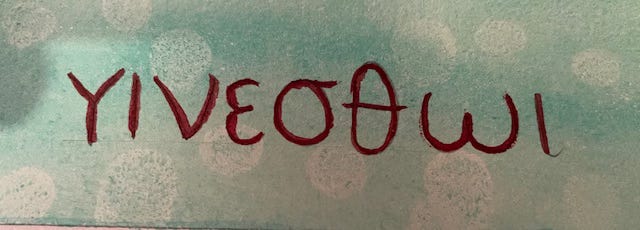
Lastly, we give thanks to the Muses themselves who imbue and develop our gifts, who cast opportunities and openings in our way to know them better, and who, with our daimon, lead us onwards. This hymn to the Muses by Proclus is given here in one of the nearest translations to the Greek, though it comes over less elegantly in English. Here, the word ‘noeric’ refers to the realm of the intelligible and intellective life of the soul, where Nous itself makes the aperture to fullness of life.
HYMN TO THE MUSES by Proclus
We hymn, we hymn the light that raises man aloft,
on the nine daughters of great Zeus with splendid voices,
who have rescued from the agony of this world, so hard to bear,
the souls who are wandering in the depths of life
through immaculate rites from intellect-awakening books,
and have taught them to strive eagerly to follow the track leading
beyond the deep gulf of forgetfulness, and to go pure to their kindred star
from which they straight away, when once they fell
into the headland of birth, mad about material lots.
But, goddesses, put an end to my much-agitated desire too
and throw me into ecstasy, through the noeric words of the wise.
That the race of men, without fear, for the gods may not lead me
astray from the most divine and brilliant path with splendid fruit;
Always draw my all-roving soul towards the holy light,
away from the hubbub of the much-wandering race
heavy-laden from your intellect-strengthening beehives,
and everlasting glory from its mind-charming eloquence.
R.M Van Den Berg, Proclus Hymns
Thank you, all, for your patience in reaching the last of the Golden Verses: we have been on the road since November 2024!
Following this last step, there is just one after-care post to conclude our studies, where we can look at possible ways of deepening this course by further study. I am still trying to discover how we can have a meet up by live video, so please bear with me, where we can have our own shared ‘Tea with Pythagoras!’
There will be another course coming, which I will announce in good time. I hope it will be more accessible to all who come here to read and learn.